894 stories
·
0 followers

Scientists Thought Parkinson's Was in Our Genes. It Might Be in the Water

1 Share
For decades, Parkinson's disease research has overwhelmingly focused on genetics -- more than half of all research dollars in the past two decades flowed toward genomic studies -- but a growing body of evidence now points to something far more mundane as a primary culprit: contaminated drinking water. A landmark study by epidemiologist Sam Goldman compared Marines stationed at Camp Lejeune in North Carolina, where trichloroethylene (TCE) had contaminated the water supply for approximately 35 years, against those at Camp Pendleton in California, which has clean water. Marines exposed to TCE at Lejeune were 70% more likely to develop Parkinson's. The latest research suggests only 10 to 15 percent of Parkinson's cases can be fully explained by genetics. Parkinson's rates in the US have doubled in the past 30 years -- a pattern inconsistent with an inherited genetic disease. The EPA moved to ban TCE in December 2024. The Trump administration moved to undo the ban in January.

Read more of this story at Slashdot.

Read the whole story
Share this story
Delete

Verizon refused to unlock man’s iPhone, so he sued the carrier and won

1 Share

When Verizon refused to unlock an iPhone purchased by Kansas resident Patrick Roach, he had no intention of giving up without a fight. Roach sued the wireless carrier in small claims court and won.

Roach bought a discounted iPhone 16e from Verizon’s Straight Talk brand on February 28, 2025, as a gift for his wife’s birthday. He intended to pay for one month of service, cancel, and then switch the phone to the US Mobile service plan that the couple uses. Under federal rules that apply to Verizon and a Verizon unlocking policy that was in place when Roach bought the phone, this strategy should have worked.

“The best deals tend to be buying it from one of these MVNOs [Mobile Virtual Network Operators] and then activating it until it unlocks and then switching it to whatever you are planning to use it with. It usually saves you about half the value of the phone,” Roach said in a phone interview.

Unlocking a phone allows it to be used with another carrier. Verizon, unlike other carriers, is required by the Federal Communications Commission to unlock phones shortly after they are activated on its network. Verizon gained significant benefits in exchange for agreeing to the unlocking requirement, first in 2008 when it purchased licenses to use 700 MHz spectrum that came with open access requirements and then in 2021 when it agreed to merger conditions to obtain approval for its purchase of TracFone.

Verizon is thus required to unlock handsets 60 days after they are activated on its network. This applies to Verizon’s flagship brand and TracFone brands such as Straight Talk.

“That was the compromise. For their competitive advantage of acquiring the spectrum, they had to give up the ability to lock down phones for an extended period of time,” Roach said.

Verizon decided it can change the rules

But 60 days after Roach activated his phone, Verizon refused to unlock it. Verizon claimed it didn’t have to because of a recent policy change in which Verizon decided to only unlock devices after “60 days of paid active service.” Roach had only paid for one month of service on the phone.

The FCC-imposed restriction says Verizon must unlock phones 60 days after activation and doesn’t say that Verizon may refuse to unlock a phone when a customer has not maintained paid service for 60 days. Moreover, Verizon implemented its “60 days of paid active service” policy for TracFone brands and Verizon prepaid phones on April 1, 2025, over a month after Roach bought the phone.

Company policy at the time Roach made the purchase was to unlock phones 60 days after activation, with no mention of needing 60 days of paid active service. In other words, Roach bought the phone under one policy, and Verizon refused to unlock it based on a different policy it implemented over a month later. Verizon’s attempt to retroactively enforce its new policy on Roach was not looked upon favorably by a magistrate judge in District Court of Sedgwick County, Kansas.

“Under the KCPA [Kansas Consumer Protection Act], a consumer is not required to prove intent to defraud. The fact that after plaintiff purchased the phone, the defendant changed the requirements for unlocking it so that plaintiff could go to a different network essentially altered the nature of the device purchased… With the change in defendant’s unlocking policy, the phone was essentially useless for the purpose plaintiff intended when he purchased it,” Magistrate Judge Elizabeth Henry wrote in an October 2025 ruling.

There’s still the question of why Verizon and its brands are demanding 60 days of paid active service before unlocking phones when the FCC-imposed conditions require it to unlock phones 60 days after activation. Roach filed a complaint to the FCC, alleging that Verizon violated the conditions. Verizon has meanwhile petitioned the FCC to eliminate the 60-day requirement altogether.

Customer rejected Verizon settlement offer

Before his small-claims court win, Roach turned down a Verizon settlement offer of $600 plus court fees because he didn’t want to give up the right to speak about the case publicly. Roach said he filed an arbitration case against Verizon nearly a decade ago on a different matter related to gift cards that were supposed to be provided through a device recycling program. He said he can’t reveal details about the settlement in that previous case because of a non-disclosure agreement.

After refusing Verizon’s settlement offer in the new case, Roach gained a modest financial benefit from his court victory. The judge ordered Verizon to pay back the $410.40 he paid for the device, plus court costs and service fees.

When it appeared that the Straight Talk iPhone wouldn’t be unlocked, Roach decided to buy an unlocked phone from Costco for $643.93. But he ended up returning that phone to Costco and paying Straight Talk for a second month of service to get the original phone unlocked, he said.

The now-unlocked phone—the one he bought from Straight Talk—is being used by his wife on their US Mobile plan. The court-ordered refund check that Verizon sent Roach included the phone cost and one month of service fees, he said.

Roach estimated he spent 20 or so hours on the suit, including arranging to have a summons served on Verizon and arguing his case in a court hearing. Roach didn’t get much of a payout considering the amount of time he spent, “but it wasn’t about that,” he said.

Roach provided Ars with the emails in which Verizon offered the $600 settlement. A Verizon executive relations employee wrote to Roach, “My offer is not an admission of guilt but trying to extend the olive branch.”

In his email declining the offer, Roach told Verizon, “I highly value the non-monetary outcomes I would achieve in court—transparency, accountability, and the absence of restrictions such as NDAs. Any settlement proposal that requires me to remain silent about the issue, while offering only modest monetary compensation, is less attractive to me than pursuing the matter through judgment. If Verizon Value is genuinely interested in settlement, the offer would need to reflect both the tangible costs I’ve incurred and the intangible but significant benefits the company receives by avoiding litigation and publicity.”

“It was really starting to irk me”

The FCC has taken no action on Roach’s complaint, and in fact, the commission could allow Verizon to scrap the 60-day requirement. As we reported in May, Verizon petitioned the FCC to let it lock phones to its network for longer periods of time. This would make it harder for customers to switch to other carriers, but Verizon claims longer locking periods are necessary to deter fraud.

The FCC hasn’t ruled yet on Verizon’s petition. Roach says Verizon seems to be acting as if it can change the rules without waiting for the FCC to do so formally. “It was really starting to irk me that they were basically just going ahead with it anyways while they had an open request,” Roach said.

He doesn’t expect the FCC to penalize Verizon, though. “It’s just kind of slimy of them, so I feel like it deserves a spotlight,” he said. “I’m not sure with the current state of the FCC that anything would happen, but the rule of law should be respected.”

The Verizon petition to relax the unlocking requirements was opposed in a filing by Public Knowledge and other consumer advocacy groups. Public Knowledge Legal Director John Bergmayer, who wrote the filing, told Ars that Roach “has a pretty strong argument under the law as it stands.”

Verizon must unlock phones automatically

The unlocking rules applying to Verizon used to be stricter, resulting in the company selling phones that were already unlocked. In 2019, Verizon requested a waiver to let it lock phones for 60 days.

The FCC granted the waiver in June 2019, allowing Verizon “to lock a customer’s handset for 60 days from the date it becomes active on Verizon’s network” and requiring it to unlock the handset once the period is over. This condition was expanded to TracFone and its brands such as Straight Talk in the 2021 merger, with the FCC approval stating that “For 700 MHz C Block TracFone devices that operate on the Verizon network and are capable of unlocking automatically (e.g., Apple devices), they will unlock automatically 60 days after activation.”

The 2019 waiver grant said Verizon must automatically unlock phones after 60 days “regardless of whether: (1) the customer asks for the handset to be unlocked, or (2) the handset is fully paid off.” The FCC order specifies that “the only exception to the rule will be that Verizon will not have to automatically unlock handsets that it determines within the 60-day period to have been purchased through fraud.”

Bergmayer said the FCC order “granting the waiver just starts a countdown, with no ‘paid service’ requirement, or room for Verizon to just impose one. Many people may use prepaid phones that they don’t keep in continuous service but just charge up as needed. Maybe people are fine with just having Wi-Fi on their phones for a while if they’re at home anyway.”

Given the restrictive nature of the FCC conditions, “I don’t think that can be read to allow a paid service requirement,” Bergmayer said. But as a practical matter, the FCC under Chairman Brendan Carr has been aggressively eliminating regulations that apply to telecom carriers under Carr’s “Delete, Delete, Delete” initiative. To actually enforce Verizon’s obligations under the current rules, “you have to convince the current FCC not to just change it,” Bergmayer said.

The FCC and Verizon did not respond to requests for comment.

Retroactive policy change irked other buyers, too

Roach wasn’t the only person whose plans to buy a discounted phone were thwarted by Verizon refusing to unlock the device after 60 days. Roach had learned of the discount offer from a Slick Deals thread. Eventually, users posting in that thread started reporting that they weren’t able to get the phone unlocked.

“My status: I used 30 days with Straight Talk. Waited another 35 days but it did not unlock,” one person wrote.

Some people in the thread said they canceled after 30 days, like Roach did, but eventually bought a second month of service in order to get the unlock. Although Verizon and its brands are required to unlock phones automatically, some commenters said they had to contact Straight Talk support to get an unlock. “Needless to say this has been an arduous journey. Good luck to others and hope you manage to successfully unlock your devices as well,” one user wrote.

There’s also a Reddit thread started by someone who said they bought a Samsung phone in February and complained that Straight Talk refused to honor the unlocking policy that was in place at the time.

“I called to ask for the phone to be unlocked on April 16 but was told it can’t be unlocked since it did not have 60 days of paid service,” the Reddit user wrote. “When I said that was not the policy on phones activated prior to April 1, the rep told me ‘we have the right to change our policy.’ I agreed, they do [have] the right to change their policy GOING FORWARD but can’t change the rules going backwards. He disagreed.”

FCC complaint didn’t go anywhere

Roach’s FCC complaint received a response from Verizon, but nothing substantial from the FCC itself. “There’s not really any sort of moderation or mediation from the FCC, it’s just kind of a dialogue between you and the other party. And I’m not really sure if any human eyes from the government even look at it. It’s probably just a data point,” Roach said.

Roach had previously called Straight Talk customer service about the changed terms. “There were a couple phone calls involved, and they were just very unrelenting that the only way that thing was getting unlocked is with the extra month of paid service,” he said.

In its formal response to the FCC, Verizon’s TracFone division asserted that it could apply the April 1, 2025, policy change to the phone that Roach bought over a month earlier. The carrier’s letter to the FCC said:

We understand Mr. Roach’s desire to use his device on another carrier’s network, and we want to provide clarity based on our Unlocking Policy, which became effective on April 1, 2025. As outlined in our policy, for cellphones capable of remote unlocking (this includes most iPhones and some Android cellphones) that were activated with Straight Talk service prior to November 23, 2021, on any carrier network, the device becomes eligible for remote unlocking upon the customer’s request after 60 days of active paid service.

Our redemption records indicate that Mr. Roach’s account does not have the required minimum 60 days of active paid service based on the payment records. Therefore, the device does not currently meet the eligibility criteria for unlocking as outlined in our policy. Once the account reflects the required 60 days of active paid service, and the device meets the other conditions, he can resubmit the unlocking request.

Verizon’s letter did not explain how its new policy complies with the FCC conditions or why the new policy should apply to phones purchased before the policy was in place.

Roach’s complaint said the FCC should force Straight Talk to “honor the FCC-mandated 60-day post-activation unlock condition for all affected phones, without imposing the additional ‘paid service’ requirement.” His complaint further urged the FCC to “investigate this practice as a violation of FCC rules and the merger conditions” and “take enforcement action to protect consumers’ rights.”

“Straight Talk’s new policy conflicts with the FCC’s binding conditions,” Roach told the agency. “The Commission’s order clearly requires unlocking after 60 days from activation, with no additional obligation to maintain service. By conditioning unlocks on two months of service, Straight Talk is effectively adding a term that Verizon did not promise and the FCC did not approve.”

Kansas consumer protection law to the rescue

In his small claims court filing, Roach alleged that Verizon and Straight violated the FCC conditions and that the retroactive application of the “60 days of paid service” term, without disclosure at the point of sale, is an unfair and deceptive practice prohibited by the Kansas Consumer Protection Act.

The magistrate judge’s ruling in Roach’s favor said, “It does appear that defendant’s change unlocking policy is contrary to the applicable FCC regulations.” She noted that federal communications law does not prevent users from suing carriers individually and that the Kansas Consumer Protection Act “contains provisions prohibiting deceptive acts by a supplier which would be applicable in this case.”

Roach asked for $10,000, mainly because that was the limit on damages in the venue, but the judge decided to award him damages in the amount of his actual losses. “He lost the benefit of the bargain he made with defendant such that his damages were loss of the $410.40,” the ruling said.

Straight Talk’s terms of service require disputes to be resolved either in arbitration or small claims court. Verizon pays the arbitration fees if users go that route. Arbitration is “a little more murky” in terms of how the parties’ interests are aligned, Roach said.

“When the arbitrators are being paid by Verizon, are they really a neutral party?” he said. Roach also said he “thought it was honestly just a good opportunity for an easy win and an opportunity to learn about the small claims court system a bit. So at that point I was like, if I don’t make any money from this, whatever, but at least I’ll learn a little bit about the process.”

Verizon’s “argument was pretty weak”

Roach said he did not consult with a lawyer on his small claims case, instead opting to do it all himself. “The first time I showed up to court for the original date, they asked for proof of the returned mail summons, and I did not have that,” he said.

The court hearing was rescheduled. When it was eventually held, the carrier sent a representative to argue against Roach.

“Their argument was pretty weak, I guess,” Roach said. “It was basically like, ‘Well, he didn’t pay the two months of service, so we didn’t unlock his phone. We offered him a settlement but he rejected it.’… My argument was, yeah, the terms had changed in kind of a consumer-unfriendly way. But beyond that, it was the fact that the terms had changed from something that was legal to something that was not legal with the federal regs. So regardless of the fact that the terms had changed, the current terms were illegal, which I thought was my strongest argument. And then I also put in that it was probably a violation of Kansas consumer protection law, which I’m glad I did.”

Roach said that toward the end of the hearing, the judge indicated that she couldn’t make a judgment based on FCC regulations and would need to rule on what the Kansas court has jurisdiction over. She issued the ruling that Verizon violated the state’s consumer protection law about five or six weeks later, he said.

Given that the FCC hasn’t acted on Verizon’s petition to change the unlocking rules, the federal regulations “haven’t changed at all in regards to Verizon’s obligation to unlock devices,” Roach said. He believes it would be relatively easy for consumers who were similarly harmed to beat Verizon in court or even to pursue a class action.

“I would think this would be a slam dunk for any further cases,” Roach said. “I don’t think I have any grounds anymore since my damages have been resolved, but it seems like it’d be a very easy class action for somebody.”

Read full article

Comments


Read the whole story
Share this story
Delete

Trump tries to block state AI laws himself after Congress decided not to

1 Share

President Trump issued an executive order yesterday attempting to thwart state AI laws, saying that federal agencies must fight state laws because Congress hasn’t yet implemented a national AI standard. Trump’s executive order tells the Justice Department, Commerce Department, Federal Communications Commission, Federal Trade Commission, and other federal agencies to take a variety of actions.

“My Administration must act with the Congress to ensure that there is a minimally burdensome national standard—not 50 discordant State ones. The resulting framework must forbid State laws that conflict with the policy set forth in this order… Until such a national standard exists, however, it is imperative that my Administration takes action to check the most onerous and excessive laws emerging from the States that threaten to stymie innovation,” Trump’s order said. The order claims that state laws, such as one passed in Colorado, “are increasingly responsible for requiring entities to embed ideological bias within models.”

Congressional Republicans recently decided not to include a Trump-backed plan to block state AI laws in the National Defense Authorization Act (NDAA), although it could be included in other legislation. Sen. Ted Cruz (R-Texas) has also failed to get congressional backing for legislation that would punish states with AI laws.

“After months of failed lobbying and two defeats in Congress, Big Tech has finally received the return on its ample investment in Donald Trump,” US Sen. Ed Markey (D-Mass.) said yesterday. “With this executive order, Trump is delivering exactly what his billionaire benefactors demanded—all at the expense of our kids, our communities, our workers, and our planet.”

Markey said that “a broad, bipartisan coalition in Congress has rejected the AI moratorium again and again.” Sen. Maria Cantwell (D-Wash.) said the “executive order’s overly broad preemption threatens states with lawsuits and funding cuts for protecting their residents from AI-powered frauds, scams, and deepfakes.”

Trump orders Bondi to sue states

Sen. Brian Schatz (D-Hawaii) said that “preventing states from enacting common-sense regulation that protects people from the very real harms of AI is absurd and dangerous. Congress has a responsibility to get this technology right—and quickly—but states must be allowed to act in the public interest in the meantime. I’ll be working with my colleagues to introduce a full repeal of this order in the coming days.”

The Trump order includes a variation on Cruz’s proposal to prevent states with AI laws from accessing broadband grant funds. The executive order also includes a plan that Trump recently floated to have the federal government file lawsuits against states with AI laws.

Within 30 days of yesterday’s order, US Attorney General Pam Bondi is required to create an AI Litigation Task Force “whose sole responsibility shall be to challenge State AI laws inconsistent with the policy set forth in section 2 of this order, including on grounds that such laws unconstitutionally regulate interstate commerce, are preempted by existing Federal regulations, or are otherwise unlawful in the Attorney General’s judgment.”

Americans for Responsible Innovation, a group that lobbies for regulation of AI, said the Trump order “relies on a flimsy and overly broad interpretation of the Constitution’s Interstate Commerce Clause cooked up by venture capitalists over the last six months.”

Section 2 of Trump’s order is written vaguely to give the administration leeway to challenge many types of AI laws. “It is the policy of the United States to sustain and enhance the United States’ global AI dominance through a minimally burdensome national policy framework for AI,” the section says.

Colorado law irks Trump

The executive order specifically names a Colorado law that requires AI developers to protect consumers against “algorithmic discrimination.” It defines this type of discrimination as “any condition in which the use of an artificial intelligence system results in an unlawful differential treatment or impact that disfavors an individual or group of individuals on the basis” of age, race, sex, and other protected characteristics.

The Colorado law compels developers of “high-risk systems” to make various disclosures, implement a risk management policy and program, give consumers the right to “correct any incorrect personal data that a high-risk system processed in making a consequential decision,” and let consumers appeal any “adverse consequential decision concerning the consumer arising from the deployment of a high-risk system.”

Trump’s order alleges that the Colorado law “may even force AI models to produce false results in order to avoid a ‘differential treatment or impact’ on protected groups.” Trump’s order also says that “state laws sometimes impermissibly regulate beyond State borders, impinging on interstate commerce.”

Trump ordered the Commerce Department to evaluate existing state AI laws and identify “onerous” ones that conflict with the policy. “That evaluation of State AI laws shall, at a minimum, identify laws that require AI models to alter their truthful outputs, or that may compel AI developers or deployers to disclose or report information in a manner that would violate the First Amendment or any other provision of the Constitution,” the order said.

States would be declared ineligible for broadband funds

Under the order, states with AI laws that get flagged by the Trump administration will be deemed ineligible for “non-deployment funds” from the US government’s $42 billion Broadband Equity, Access, and Deployment (BEAD) program. The amount of non-deployment funds will be sizable because it appears that only about half of the $42 billion allocated by Congress will be used by the Trump administration to help states subsidize broadband deployment.

States with AI laws would not be blocked from receiving the deployment subsidies, but would be ineligible for the non-deployment funds that could be used for other broadband-related purposes. Beyond broadband, Trump’s order tells other federal agencies to “assess their discretionary grant programs” and consider withholding funds from states with AI laws.

Other agencies are being ordered to use whatever authority they have to preempt state laws. The order requires Federal Communications Commission Chairman Brendan Carr to “initiate a proceeding to determine whether to adopt a Federal reporting and disclosure standard for AI models that preempts conflicting State laws.” It also requires FTC Chairman Andrew Ferguson to issue a policy statement detailing “circumstances under which State laws that require alterations to the truthful outputs of AI models are preempted by the Federal Trade Commission Act’s prohibition on engaging in deceptive acts or practices affecting commerce.”

Finally, Trump’s order requires administration officials to “prepare a legislative recommendation establishing a uniform Federal policy framework for AI that preempts State AI laws that conflict with the policy set forth in this order.” The proposed ban would apply to most types of state AI laws, with exceptions for rules relating to “child safety protections; AI compute and data center infrastructure, other than generally applicable permitting reforms; [and] state government procurement and use of AI.”

It would be up to Congress to decide whether to pass the proposed legislation. But the various other components of the executive order could dissuade states from implementing AI laws even if Congress takes no action.

Read full article

Comments


Read the whole story
Share this story
Delete

Senator endorses discredited doctor’s book that claims chemical treats autism, cancer

1 Share

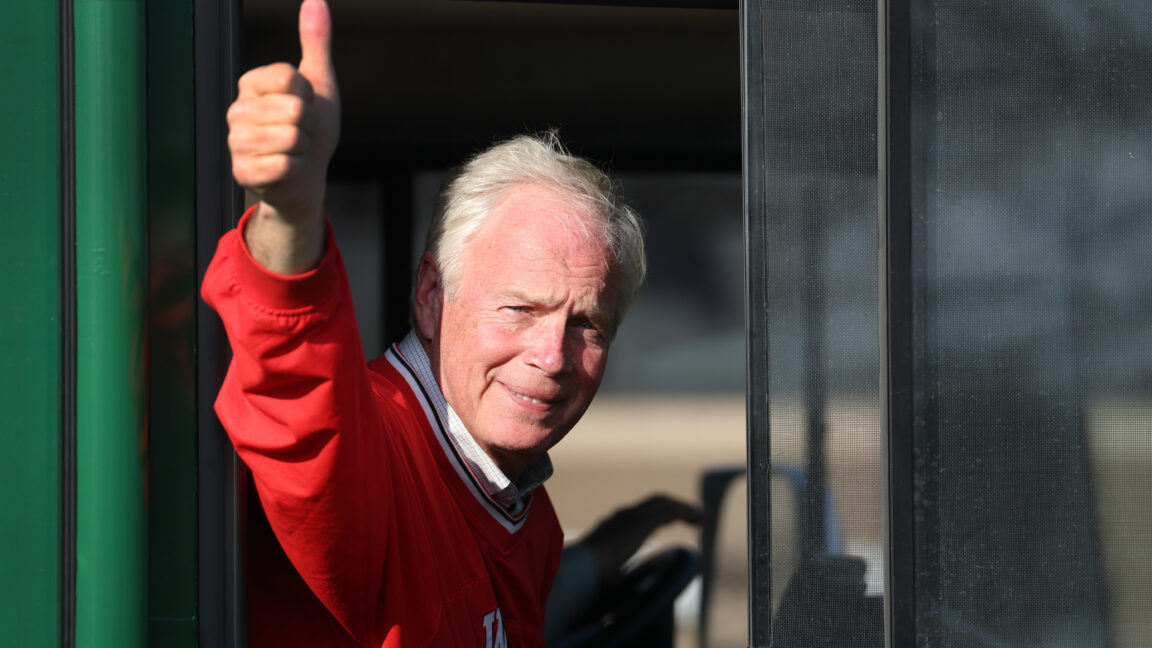
For years, Sen. Ron Johnson has been spreading conspiracy theories and misinformation about COVID-19 and the safety of vaccines.

He’s promoted disproven treatments for COVID-19 and claimed, without evidence, that athletes are “dropping dead on the field” after getting the COVID-19 vaccination. Now the Wisconsin politician is endorsing a book by a discredited doctor promoting an unproven and dangerous treatment for autism and a host of ailments: chlorine dioxide, a chemical used for disinfecting and bleaching.

The book is “The War on Chlorine Dioxide: The Medicine that Could End Medicine by Dr. Pierre Kory, a critical care specialist who practiced in Wisconsin hospitals before losing his medical certification for statements advocating using an antiparasite medication to treat COVID-19. The action, he’s said, makes him unemployable, even though he still has a license.

Kory has said there’s a globally coordinated campaign by public health agencies, the drug industry, and the media to suppress evidence of the medicinal wonders of chlorine dioxide. His book, according to its website, contends that the “remarkable molecule” works “to treat everything from cancer and malaria to autism and COVID.”

The book jacket features a prominent blurb from Johnson calling the doctor’s treatise: “A gripping tale of corruption and courage that will open eyes and prompt serious questions.”

Chlorine dioxide is a chemical compound that has a range of applications, including as a disinfectant and deodorizer. Food processing plants apply it to sanitize surfaces and equipment. Hospitals use it to sterilize medical devices, and some municipalities use low levels to treat public water supplies. Paper mills rely on it to whiten wood pulp. Safety experts advise those who handle it to work in well-ventilated spaces and to wear protective gloves.

Concentrations in drinking water systems higher than 0.8 milligrams per liter can be harmful, especially to infants, young children, and fetuses, according to the Environmental Protection Agency.

Still, for many years people in online discussion groups have been promoting the use of chlorine dioxide in a mixture that they call a “miracle mineral solution,” ingested to rid people of a host of maladies. The Food and Drug Administration has warned that drinking these chlorine dioxide mixtures can cause injury and even death.

It is not medicinal, despite Kory’s contention. “It is all lunacy. Absolutely, it’s 100% nonsense,” said Joe Schwarcz, director of McGill University’s Office for Science and Society in Montreal and an expert on the threat of pseudoscience. Schwarcz has written articles about the so-called miracle mineral solution, calling it “a poison” when it’s in high concentrations.

Kory’s book, set to be released to the public in January, argues that word of chlorine dioxide’s effectiveness has been suppressed by government and medical forces that need people to remain perpetually ill to generate large profits. The use of the word “war” in the title is fitting, Kory said in a recent online video on his co-author’s Substack. “In the book I detail many, many assassination attempts of doctors who try to bring out knowledge around chlorine dioxide,” he said.

Johnson confirmed to ProPublica in an email that he authorized the statement on the cover. “After reading the entire book, yes I provided and approved that blurb,” he said. “Have you read the book?”

ProPublica asked Kory and his co-author, Jenna McCarthy, to provide an advance copy, an interview, and responses to written questions. Kory did not respond. McCarthy wrote in an email to ProPublica that she was addressing some of the questions on her Substack. (She did not send a book or agree to an interview.)

The book “is a comprehensive examination of the existing evidence and a plea for open-minded inquiry and rigorous research,” she wrote on Substack. She dismissed warnings about chlorine dioxide’s toxicity in high concentrations, writing: “Everything has a toxic dose — including nutmeg, spinach, and tap water.”

She said that chlorine dioxide is being studied in controlled settings by researchers in the United States and Latin America and that “the real debate is how it should be used, at what dose, and in which clinical contexts.”

Her Substack post was signed “Jenna (& Pierre).”

Johnson did not agree to an interview and did not answer questions emailed to his office by ProPublica, including whether he views chlorine dioxide as a world-changing medical treatment and whether he believes the FDA warnings are false.

“It’s called snake oil”

Johnson has been an advocate of Kory’s for years, calling the doctor as an expert witness in two 2020 Senate hearings. In one, Kory championed taking the drug ivermectin, an antiparasite medicine, to treat COVID-19.

In 2021, an analysis of data from clinical trials concluded that ivermectin could reduce deaths from COVID-19 and may produce other positive effects. McCarthy cited that analysis in her Substack response.

In 2022, however, the American Journal of Therapeutics, which had published the study, warned that suspicious data “appears to invalidate the findings” regarding ivermectin’s potential to decrease deaths.

Later clinical trials have found no beneficial effect of ivermectin for COVID-19, and the FDA has warned that taking large doses can be dangerous. The drug’s manufacturer has said it hadn’t found any scientific basis for the idea that ivermectin can effectively treat COVID-19. Kory, though, continued advocating for ivermectin.

In 2024 the American Board of Internal Medicine, which credentials physicians in certain specialties, revoked Kory’s certifications in internal medicine, pulmonary disease, and critical care for making false and misleading public statements about the ability of ivermectin to treat COVID-19. Hospitals and many insurance networks typically require doctors to be board certified.

Kory vigorously fought the disciplinary action, arguing to the ABIM that he provided substantial medical and scientific evidence to support his recommendations for addressing COVID-19, though not the “consensus-driven” approach. He also sued the board in federal court, citing his free speech rights in a case that is still progressing in the 5th US Circuit Court of Appeals. On Substack, McCarthy excoriated the ABIM, saying it “bullies physicians” and “enforces ideological conformity.”

In 2022, Johnson and Kory penned a Fox News op-ed opposing a California bill that would strip doctors’ licenses for espousing misinformation about COVID-19. The bill became law but was repealed after a court fight. A federal judge found the statute’s definition of misinformation to be too vague, which could infringe on doctors’ right to free speech.

Johnson, who has been in Congress since 2011, has a history of advocating for experimental treatments and viewing the government as an impediment. Dr. Peter Lurie, president and executive director of the Center for Science in the Public Interest, a public health advocacy group, said that among members of Congress, Johnson was “an early adopter of anti-science ideas.”

Lurie said that Johnson is no longer an outlier in Washington, which now has many more elected lawmakers whom he considers anti-science. “What may have started off as the cutting edge of an anti-science movement has now turned into a much more broader-based movement that is supported by millions of people,” he said.

Earlier this year, Johnson held a hearing highlighting a flawed study claiming that vaccinated children had an increased rate of serious chronic diseases when compared to children who were not vaccinated. The conclusion questions the scientific consensus that vaccines are safe. The study’s researchers chose not to publish it because of problems they found in their data and methodology.

In November, Johnson and Kory were listed among the speakers at a conference of the Children’s Health Defense, a nonprofit that stirs anti-vaccine sentiment. It was launched in 2018 by Health and Human Services Secretary Robert F. Kennedy Jr., whose FDA is considering new ways to more closely scrutinize vaccine safety. 

HHS did not respond to requests from ProPublica about Kennedy’s views on chlorine dioxide. At his confirmation hearing, Kennedy praised President Donald Trump for his wide search for a COVID-19 remedy in his first term, which Kennedy said included vaccines, various drugs, “even chlorine dioxide.”

Kory’s publisher is listed as Bella Luna Press, which has issued at least two other titles by McCarthy. “Thanks to the Censorship Industrial Complex, you won’t find The War on Chlorine Dioxide on Amazon or at Barnes & Noble. We had to design and build this website, figure out formatting and printing and shipping, and manage every aspect of order processing ourselves,” the book’s website states. (A representative for Bella Luna could not be reached for comment.)

As this new book is released, the autism community is also grappling with another controversy: the unsubstantiated assertion by Kennedy that Tylenol use by pregnant women poses an increased risk of autism. In addition, under Kennedy, the Centers for Disease Control and Prevention revised its website in November to cast doubt on the long-held scientific conclusion that childhood vaccines do not cause autism.

Some parents of children with autism, desperate for a remedy, have long reached for dubious and at times dangerous panaceas, including hyperbaric oxygen chambers and chelation therapy, used for the treatment of heavy metal poisoning. Neither method has been proven effective.

Helen Tager-Flusberg, director of the Center for Autism Research Excellence at Boston University, said Johnson has “acted extremely irresponsibly” in lending his name to a book making claims about chlorine dioxide treating autism.

“Wisconsin is filled with experts—clinical experts, medical experts, scientists—who understand and have studied autism and treatments for autism for many many years,” she said. “He’s chosen to completely ignore the clinical and the scientific community.”

People with autism may take medication to reduce anxiety, address attention problems, or reduce severe irritability. Many benefit from behavioral interventions and special education services to help with learning and functional abilities. But there is no cure, said Tager-Flusberg.

Referring to chlorine dioxide, she said: “We have had examples of this probably throughout the history of medicine. There’s a word for this, it’s called snake oil.”

In her response on Substack to ProPublica, McCarthy wrote that “chlorine dioxide is being used to treat (nobody said ‘cure’) autism with life-changing results.”

The search for miracle cures

The mother of an autistic son, Melissa Eaton of North Carolina, heard Kory reference his book in early November on The HighWire, an Internet talk show hosted by Del Bigtree, a prominent vaccine skeptic and former communications director for Kennedy’s 2024 presidential campaign. She then looked up the book online and noticed Johnson’s endorsement.

Eaton for many years has worked to expose people who peddle chlorine dioxide and to report apparent injuries to authorities. She monitors social media forums where parents discuss giving it to their children orally or via enemas. Sometimes the families reveal that their children are sick. “They’re throwing up and vomiting and having diarrhea and rashes,” Eaton said.

Some adherents advise parents that the disturbing effects indicate that the treatment is working, ridding the body of impurities, or that the parents should alter the dosage.

“Most of these kids are nonverbal,” Eaton said. “They’re not able to say what’s hurting them or what’s happening to them. The parents feel they’re doing the right thing. That’s how they view this: They’re helping to cure autism.”

The idea that chlorine dioxide can be a miracle cure began to spread about 20 years ago when a gold prospector, Jim Humble, wrote a book claiming his team in Guyana fell ill with malaria and recovered after drinking safe amounts of chlorine dioxide.

Humble later co-founded a “health and healing” church in Florida with a man named Mark Grenon, who called himself an archbishop and sold a chlorine dioxide solution as a cure for COVID-19. They described it as a “miracle mineral solution,” or MMS.

Grenon went to prison in 2023 for conspiring to defraud the United States by distributing an unapproved and misbranded drug. The scheme took in more than $1 million, according to prosecutors.

An affidavit in the case filed by a special agent with the FDA Office of Criminal Investigations noted: “FDA has received numerous reports of adverse reactions to MMS. These adverse reactions include hospitalizations, life-threatening conditions, and death.”

Grenon, who is now out of prison, told ProPublica that he too is writing a book about chlorine dioxide. “My book will tell the truth.” He declined further comment.

Chlorine dioxide is currently used in many ways that are not harmful. It is found in some consumer products like mouthwashes, but it is not meant to be swallowed in those instances. (One popular mouthwash warns to “keep out of reach of children.”) It’s also available to consumers in do-it-yourself packages where they combine drops from two bottles of different compounds—commonly sodium chlorite and hydrochloric acid—and add it to water. Hikers often carry the drops, or tablets, using small amounts to make quarts of fresh water potable.

But numerous online shoppers post product reviews that go further, referring to it as a tonic. Various online guides, some aimed at parents of autistic children, recommend a shot-glass-size dose, sometimes given multiple times a day and even hourly. That can far exceed the threshold the EPA considers safe.

McCarthy, addressing ProPublica on Substack, wrote: “You point to various online guides that offer what could be considered dangerous dosing instructions. We agree, the internet is a terrifying wasteland of misinformation and disinformation.”

In the Substack video, Kory said he felt compelled to spread the word about chlorine dioxide much as he did about ivermectin, even though it cost him professionally.

He no longer has a valid medical license in Wisconsin or California, where he did not renew them, according to the Substack post. His medical licenses in New York and Michigan are active.

“I like to say I was excommunicated from the church of the medical establishment,” he said in the Substack video. As a result, he said, he turned to telehealth and started a practice.

In the November 6 HighWire episode hosted by Bigtree, the discussion included talk not just of chlorine dioxide’s medicinal potential but also of how cheap and easy it is to obtain.

“On Amazon, it’s literally, you get two bottles, well, it comes in two,” Kory started to explain, before stopping that train of thought.

“I wouldn’t know how to make it,” he said.

This story was originally published by ProPublica. ProPublica is a Pulitzer Prize-winning investigative newsroom. Sign up for The Big Story newsletter to receive stories like this one in your inbox.

Read full article

Comments


Read the whole story
Share this story
Delete

Supreme Court appears likely to approve Trump’s firing of FTC Democrat

1 Share

The Supreme Court’s conservative justices appear ready to overturn a 90-year-old precedent that said the president cannot fire a Federal Trade Commission member without cause. A ruling for Trump would give him more power over the FTC and potentially other independent agencies such as the Federal Communications Commission.

Former FTC Commissioner Rebecca Kelly Slaughter, a Democrat, sued Trump after he fired both Democrats from the commission in March. Slaughter’s case rests largely on the 1935 ruling in Humphrey’s Executor v. United States, in which the Supreme Court unanimously held that the president can only remove FTC commissioners for inefficiency, neglect of duty, or malfeasance in office.

Chief Justice John Roberts said during yesterday’s oral arguments that Humphrey’s Executor is a “dried husk” despite being the “primary authority” that Slaughter’s legal team is relying on. Roberts said the court’s 2020 ruling in Seila Law made it “pretty clear… that Humphrey’s Executor is just a dried husk of whatever people used to think it was because, in the opinion itself, it described the powers of the agency it was talking about, and they’re vanishingly insignificant, have nothing to do with what the FTC looks like today.”

In Seila Law, the Supreme Court ruled that the for-cause removal precedent from Humphrey’s Executor could not be extended to the Consumer Financial Protection Bureau (CFPB). The ruling said the CFPB “possesses significant administrative and enforcement authority, including the power to seek daunting monetary penalties against private parties in federal court—a quintessentially executive power not considered in Humphrey’s Executor.”

The Trump administration argues that Humphrey’s Executor shouldn’t apply to the current FTC because it exercises significant executive power. A federal appeals court disagreed and reinstated Slaughter, writing that the FTC’s powers have not changed since the 1935 ruling. But in September, the Supreme Court granted a stay that keeps Slaughter off the FTC at least until the court rules on the case’s merits.

Conservative justices skeptical of independent agencies

Humphrey’s Executor “was addressing an agency that had very little, if any, executive power, and that may be why they were able to attract such a broad support on the court at the time,” Roberts said.

Justice Samuel Alito suggested that a ruling for Slaughter could open the way for Congress to convert various executive branch agencies into “multi-member commissions with members protected from plenary presidential removal authority.”

“I could go down the list… How about Veterans Affairs? How about Interior? Labor? EPA? Commerce? Education? What am I missing?” Alito said.

“Agriculture,” Justice Neil Gorsuch responded. The official transcript notes that Gorsuch’s response was met with laughter.

Justice Brett Kavanaugh expressed skepticism about the power of independent agencies, saying, “I think broad delegations to unaccountable independent agencies raise enormous constitutional and real-world problems for individual liberty.” He said the court’s approach with “the major questions doctrine over the last several years” has been to “make sure that we are not just being casual about assuming that Congress has delegated major questions of political or economic significance to independent agencies, or to any agencies for that matter.”

Kagan: President would have “uncontrolled, unchecked power”

Unlike the unanimous Humphrey’s Executor, the Slaughter case appears headed for a split ruling between the court’s conservative and liberal justices. Justice Ketanji Brown Jackson said there are “dangers and real-world consequences” of the Trump administration’s position.

“My understanding was that independent agencies exist because Congress has decided that some issues, some matters, some areas should be handled in this way by nonpartisan experts, that Congress is saying that expertise matters with respect to aspects of the economy and transportation and the various independent agencies that we have,” Jackson said. “So having a president come in and fire all the scientists and the doctors and the economists and the Ph.D.s and replacing them with loyalists and people who don’t know anything is actually not in the best interest of the citizens of the United States. This is what I think Congress’s policy decision is when it says that these certain agencies we’re not going to make directly accountable to the president.”

Justice Elena Kagan said there has historically been a “bargain” in which “Congress has given these agencies a lot of work to do that is not traditionally executive work… and they’ve given all of that power to these agencies largely with it in mind that the agencies are not under the control of a single person, of the president, but that, indeed, Congress has a great deal of influence over them too. And if you take away a half of this bargain, you end up with just massive, uncontrolled, unchecked power in the hands of the president.”

Gorsuch argued that the bargain has given too much power to agencies. “The one thing our framers knew is that every political actor seeks to enhance its own power. We all know that to be true from our own experiences,” Gorsuch said. “And this court, as part of this bargain, has allowed these agencies to exercise both executive and legislative [power].”

Sotomayor: “You’re asking us to destroy the structure of government”

Justice Sonia Sotomayor said that “independent agencies have been around since the founding… this is not a modern contrivance.” She told US Solicitor General John Sauer, who argued the case for the Trump administration, that “neither the king nor parliament nor prime ministers, England at the time of the founding, ever had an unqualified removal power… You’re asking us to destroy the structure of government and to take away from Congress its ability to protect its idea that the government is better structured with some agencies that are independent.”

US law lists 19 federal agencies that are classified as “independent regulatory agencies.” The agencies’ authorities vary based on their specific powers granted by Congress, but they typically have multimember structures and are insulated from direct presidential control.

In February, Trump issued an executive order declaring that historically independent agencies such as the FTC and FCC could no longer operate independently from the White House. While Trump hasn’t fired the FCC’s only Democrat, Anna Gomez, both the FTC and FCC are led by Republican chairs who haven’t objected to Trump’s growing control over historically independent agencies.

US Senator Amy Klobuchar (D-Minn.) said yesterday that “Congress has long used its power to establish independent agencies to protect consumers, workers, investors, and others without undue political pressure. Commissioner Slaughter’s unlawful firing goes against nearly a century of precedent that ensures these agencies remain independent and work for Americans, not the president’s friends and donors. It is deeply troubling that conservative justices appear ready to give the president even more unchecked power.”

Read full article

Comments


Read the whole story
Share this story
Delete

Court: “Because Trump said to” may not be a legally valid defense

1 Share

On Monday, US District Court Judge Patti Saris vacated a Trump executive order that brought a halt to all offshore wind power development, as well as some projects on land. That order had called for the suspension of all permitting for wind power on federal land and waters pending a review of current practices. This led states and an organization representing wind power companies to sue, claiming among other things that the suspension was arbitrary and capricious.

Over 10 months since the relevant government agencies were ordered to start a re-evaluation of the permitting process, testimony revealed that they had barely begun to develop the concept of a review. As such, the only reason they could offer in defense of the suspension consisted of Trump’s executive order and a Department of the Interior memo implementing it. “Whatever level of explanation is required when deviating from longstanding agency practice,” Judge Saris wrote, “this is not it.”

Lifting Trump’s suspension does not require the immediate approval of any wind projects. Instead, the relevant agencies are likely to continue following Trump’s wishes and slow-walking any leasing and licensing processes, which may force states and project owners to sue individually. But it does provide a legal backdrop for any suits that ultimately occur, one in which the government’s actions have little justification beyond Trump’s personal animosity toward wind power.

Can you stop the wind?

The previous administration had made developing offshore wind a major priority, and it plays a significant role in the climate plans for many northeast states, which often lack good onshore sites for wind or solar power. But the Trump administration issued its block on wind power development on land or water it controls on its very first day in office, pending a “comprehensive assessment” of the permitting process. Since then, all projects that hadn’t made it through the permitting process have been paused, and the administration has even attempted to stop two projects that were already under construction.

In one of those cases, a judge lifted the hold on construction, ruling that a lack of a sound justification for the hold made it “the height of arbitrary and capricious,” a legal standard that determines whether federal decision-making is acceptable under the Administrative Procedures Act. If this were a fictional story, that would be considered foreshadowing.

With no indication of how long the comprehensive assessment would take, 17 states sued to lift the hold on permitting. They were joined by the Alliance for Clean Energy New York, which represents companies that build wind projects or feed their supply chain. Both the plaintiffs and the agencies that were sued asked for summary judgment in the case.

The first issue Judge Saris addressed is standing: Are the states suffering appreciable harm from the suspension of wind projects? She noted that they would receive tax revenue from the projects, that their citizens should see reduced energy costs following their completion, and that the projects were intended to contribute to their climate goals, thus limiting harm to their citizens. At one point, Saris even referred to the government’s attempts to claim the parties lacked standing as “tilting at windmills.”

The government also argued that the suspension wasn’t a final decision—that would come after the review—and thus didn’t fall under the Administrative Procedures Act. But Saris ruled that the decision to suspend all activity pending the rule was the end of a decision-making process and was not being reconsidered by the government, so it qualified.

Because Trump told us to

With those basics out of the way, Saris turned to the meat of the case, which included a consideration of whether the agencies had been involved with any decision-making at all. “The Agency Defendants contend that because they ‘merely followed’ the Wind Memo ‘as the [Wind Memo] itself commands,’ the Wind Order did not constitute a ‘decision’ and therefore no reasoned explanation was required,” her ruling says. She concludes that precedent at the circuit court level blocks this defense, as it would mean that agencies would be exempt from the Administrative Procedures Act whenever the president told them to do anything.

(A recent Supreme Court precedent in Orr was determined not to apply because it focuses on a statute that specifically allocates decision-making to the president.)

Things then went very badly for the government, as the Administrative Procedures Act requires agencies to provide a “reasoned explanation” for their actions. And the government can’t come up with anything beyond Trump ordering them to make the decision. “The administrative record consists of only two documents: the Wind Memo and the Interior Department’s written order suspending the issuance of renewable energy authorizations pursuant to the Wind Memo,” Saris wrote. “The Agency Defendants have certified that these two documents constitute the entirety of the ‘evidence considered, directly or indirectly, by [the Agency] Defendants for the alleged decision.”

Testimony didn’t help matters for the government. “The Agency Defendants candidly concede that the sole factor they considered in deciding to stop issuing permits was the President’s direction to do so,” the judge noted.

That makes the agency’s actions arbitrary and capricious and would be enough for summary judgment. But Saris also ruled that the very idea of an indefinite suspension runs counter to the statutes that govern the issuing of leases and licenses for wind power, which stipulate that decisions must be made in a “reasonable time.” But the agencies have not provided any indication of how long the Assessment will take. In testimony, they claimed it was “underway,” but one agency acknowledged that it had only gotten as far as identifying the staff who would take part and had only “engaged in preliminary coordination to prepare to support the assessment.”

What comes next

Given its obvious legal flaws, Saris has vacated the entire wind-focused executive order. So if any of the agencies want to block wind power development, they’ll have to come up with a reasonable justification for doing so beyond “the president told us to.” And so far, at least, all indications from this and the previous case are that nobody has even started to consider any possible justifications. Alternatively, the agencies could appeal to the Supreme Court and hope the six conservative justices decide that a presidential order is all that’s needed to overrule the Administrative Procedures Act.

That doesn’t mean that agencies will suddenly start approving projects within the “reasonable time” set out in the relevant statutes. Failure to do so will simply mean that some of the parties involved will have to start an additional lawsuit, adding months of additional delays. In the meantime, the companies backing these projects will lose money on financing, idled hardware, infrastructure, and workers; a number of companies have already abandoned potential projects.

So while the president’s personal animosity toward wind power is in no way legally compelling, the uncertainty it created may ultimately lead to the same end.

Read full article

Comments


Read the whole story
Share this story
Delete
Next Page of Stories